Is WordPress still worth it in 2026?
By JY.Choi
WordPress still powers more websites than any other platform, but its share has been slipping in 2026 even as the software itself keeps shipping new releases — both things are true at once, and neither one alone answers whether it’s worth it for a new blog.
Key takeaways
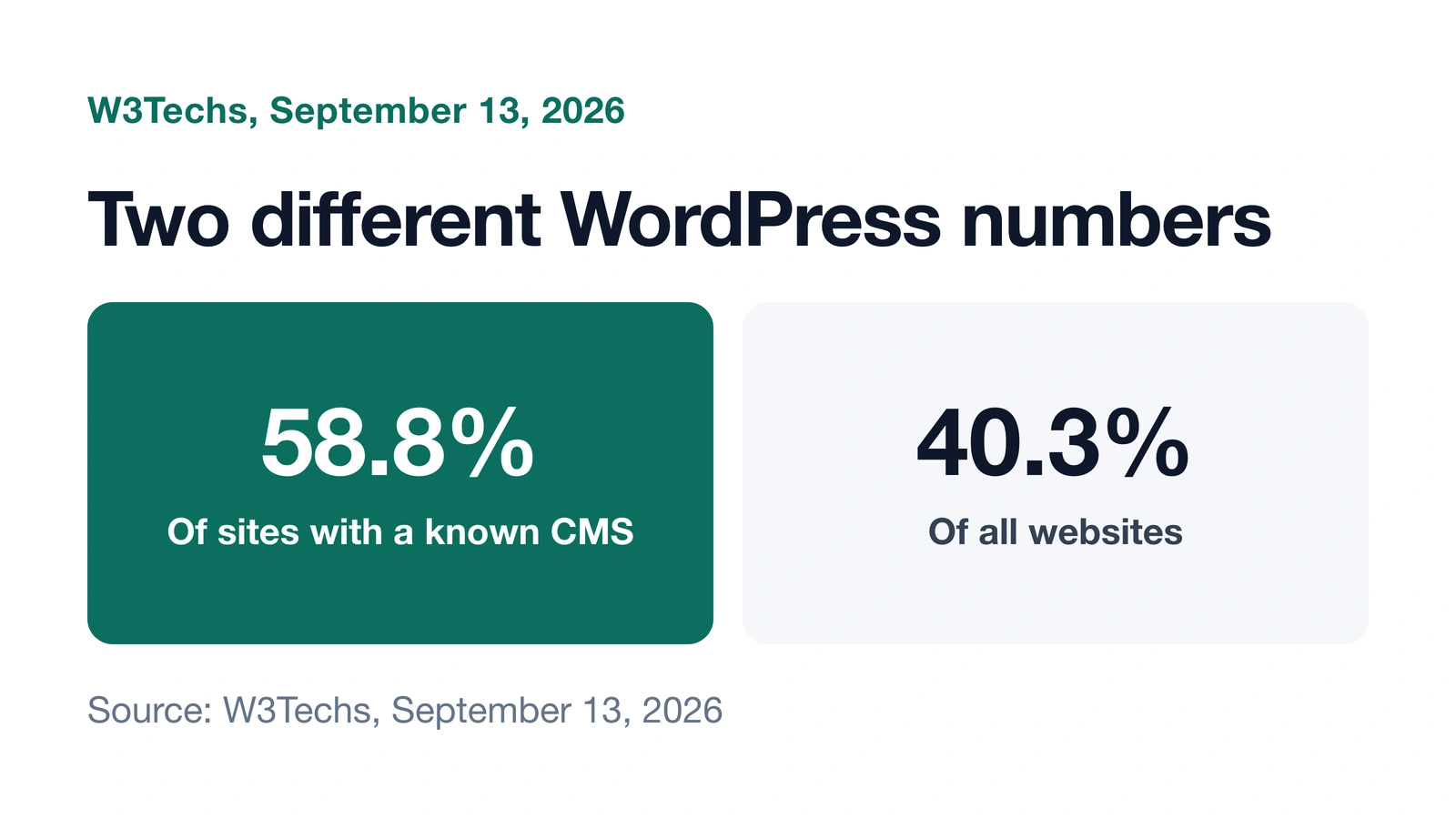
- WordPress runs 58.8% of all websites whose content management system is known, and 40.3% of all websites overall, per W3Techs’ live tracker dated September 13, 2026 (W3Techs).
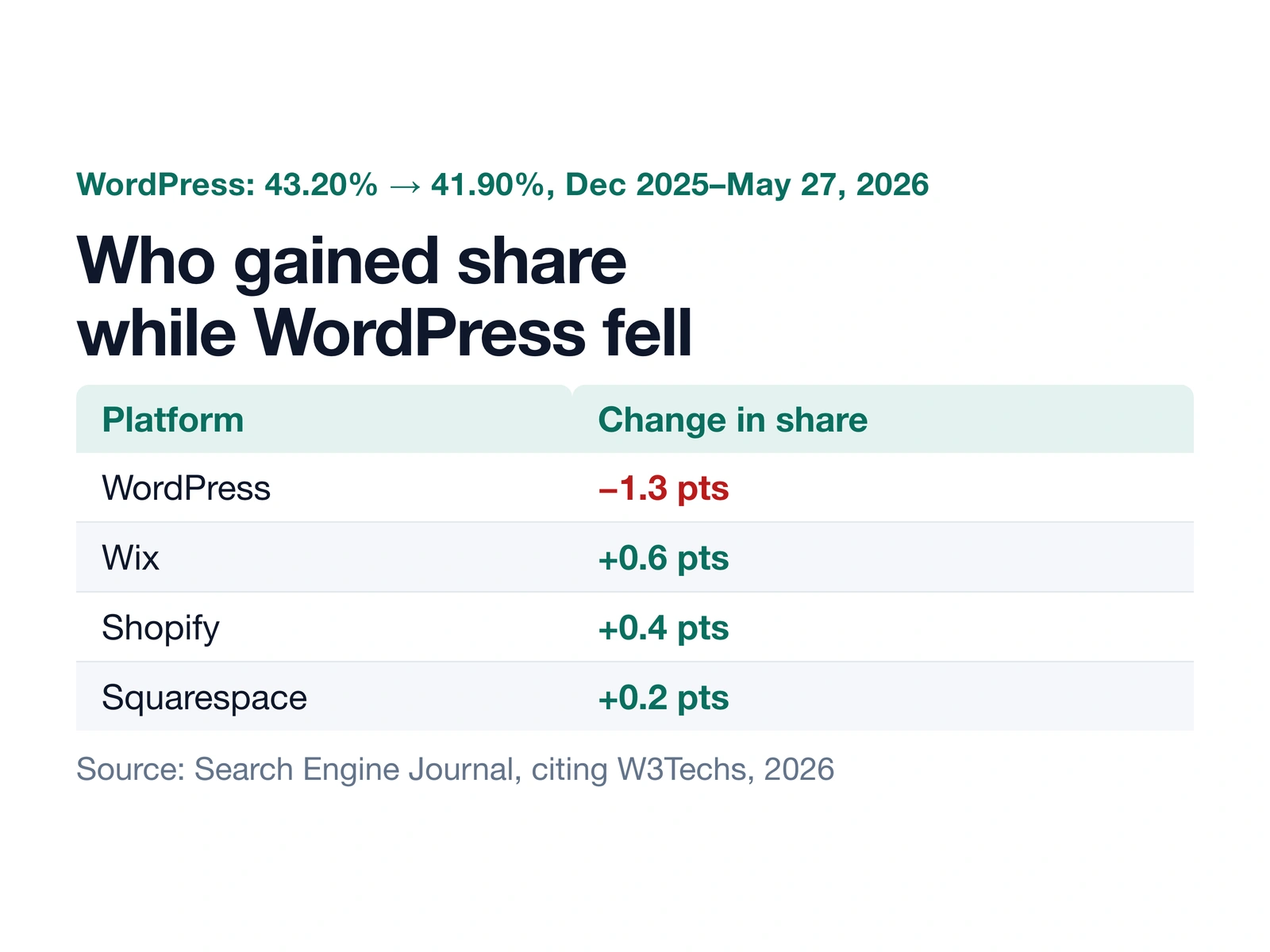
- Search Engine Journal, citing W3Techs, reported WordPress’s share of all websites fell from 43.20% in December 2025 to 41.90% by May 27, 2026, while Wix, Shopify, and Squarespace each gained share over the same window (SEJ).
- WordPress 7.1 “Mary Lou” shipped 2026-08-19 with more than 800 contributors, including over 170 first-time contributors, and 7.1.1 and 7.2 releases are already scheduled (WordPress.org News).
- WordPress remains free, open-source software under the GPLv2 license, meaning you can run, study, modify, and redistribute it without paying anyone for the software itself (WordPress.org).
In this guide
- What the decline numbers actually say
- What “percentage of all websites” versus “percentage of known CMS” means
- Is the software itself still being developed?
- What WordPress doesn’t do for you
- Why nichestead.com is built on WordPress
- Bottom line
What the decline numbers actually say
WordPress’s market share fell in 2026, and the drop is real and sourced, not a rumor. Search Engine Journal, citing W3Techs, reported that WordPress’s share of all websites dropped from 43.20% in December 2025 to 41.90% by May 27, 2026 — a 1.3-point decline in six months, about twice the 0.60-point decline WordPress saw across all of 2025 (SEJ). Over that same window, Wix gained 0.6 points, Shopify gained 0.4 points, and Squarespace gained 0.2 points (SEJ).
W3Techs’ own live tracker, dated September 13, 2026 on the page itself, puts WordPress’s current share at 40.3% of all websites (W3Techs) — consistent with the SEJ figures having continued to drift down slightly since May.
What “percentage of all websites” versus “percentage of known CMS” means
W3Techs actually publishes two different WordPress numbers, and mixing them up changes the story. “58.8% of all the websites whose content management system we know” measures WordPress’s share only among sites that use a CMS at all. “40.3% of all websites” measures WordPress’s share of every website W3Techs tracks, including sites with no CMS or one it can’t identify (W3Techs). Both numbers are accurate; they’re answering different questions. A headline that says only “WordPress runs X% of the web” without specifying which of these two figures it means is easy to misread in either direction.
Is the software itself still being developed?
Yes, on an active, dated schedule. WordPress 7.1, nicknamed “Mary Lou,” released 2026-08-19 at WordCamp US in Phoenix with more than 800 contributors, over 170 of them first-time contributors, and added built-in responsive styling, browser-side media compression with AVIF/HEIC/HDR support, inline collaboration notes, and a persistent admin bar (WordPress.org News). WordPress core’s own release-planning site has already scheduled a 7.1.1 point release for between September 1 and 24, 2026, and describes WordPress 7.2 as being assembled as the final major release of 2026, with a named release squad (Make WordPress Core, Make WordPress Core). A declining market-share percentage and an actively developed, regularly released piece of software are two different measurements, and both are true here at once.
What WordPress doesn’t do for you
WordPress itself is free, open-source software licensed under the GPLv2 or later, giving you the right to run, study, modify, and redistribute it without paying for the software (WordPress.org). That license covers the software only — it doesn’t include hosting, a domain name, a theme, or the plugins most sites need, all of which cost money and time to choose and set up separately. Hosting renewal price: what “renews at” means and how to check it before you buy covers one of those real, recurring costs in detail.
Why nichestead.com is built on WordPress
This site runs on WordPress. That choice was made without prior blogging or WordPress experience, based on WordPress’s free, open-source license and its position as the most widely used CMS by a wide margin, even accounting for its recent share decline. Whether that’s the right call for another new blog depends on the same tradeoff this post lays out: if you want the platform with the largest plugin and theme ecosystem and full control over your own hosting, WordPress fits; if you want everything bundled into one paid subscription with no separate hosting decision to make, a platform like Squarespace may fit better. WordPress vs Squarespace for a beginner blog compares the two on that basis.
Bottom line
WordPress’s share of the web declined through 2026 by a real, sourced margin, while the software itself kept shipping major and minor releases on a public schedule. Neither fact cancels the other out. Whether WordPress is “worth it” depends on what you’re optimizing for — ecosystem size and control, or one bundled subscription — not on a single share percentage.
How AI was used: Claude researched this post using W3Techs’, Search Engine Journal’s, and WordPress.org’s own published figures and release announcements, wrote it, and made two diagrams. JY.Choi, the site’s owner, set the editorial rules; no person reviews posts before they go live. This post is based on the linked official statistics and documentation, not hands-on platform testing.